Have you ever had a choir of crickets follow you like a shadow? You are doing everything possible, but your real estate business is still stagnant. Location can affect your costs and opportunities, but a statewide label cannot tell you whether your own business will succeed.
There is no single worst state for every real estate agent. If your concern is living costs, California, Hawaii and New Jersey had the highest state price levels in the BEA’s 2024 comparison. That is a cost measure, not a ranking of agent earnings or career prospects.
To judge a market, compare the cost of living with local sales activity, competition, business expenses and your own route to clients. Here is what the available data can tell you, and how to make a more useful comparison.
States Where Living Costs Deserve a Closer Look
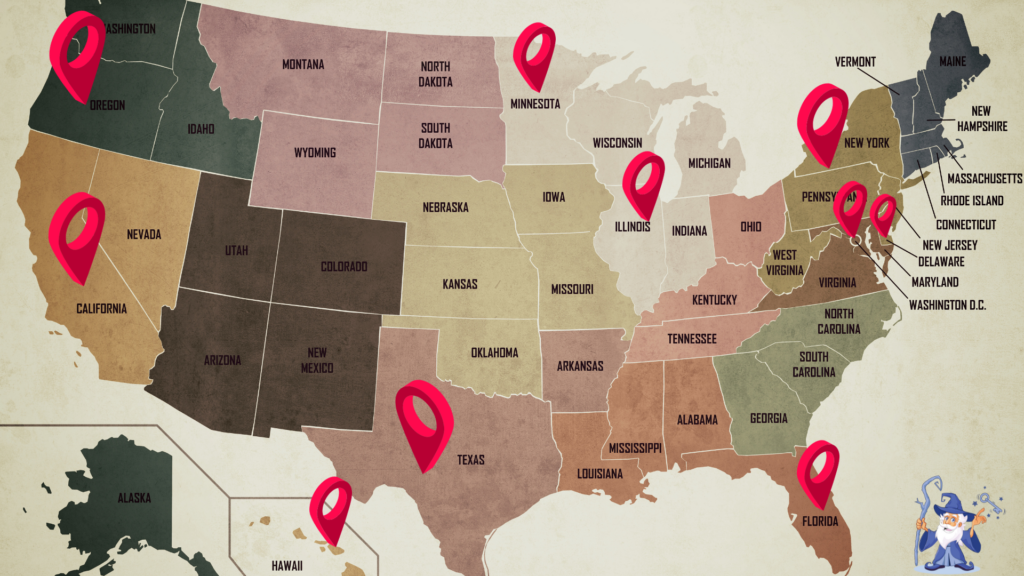
A state that works well for one agent may be difficult for another. Our guide to the best states for real estate agents is another starting point, but investigate the specific market and brokerage you would join.
The BEA release dated February 19, 2026 compares 2024 price levels using regional price parities. A value of 100 represents the U.S. overall price level. It does not measure how difficult it is to get licensed or how much a new agent will earn.
Hawaii
Hawaii’s 2024 all-items regional price parity was 110.0, about 10% above the national price level. Higher living costs mean you should examine your personal budget closely before relying on commission income.
That figure does not establish Hawaii as the lowest-paying state for agents. Compare the actual area where you would work, the cost of running your business and the time needed to build clients.
California
California’s 2024 all-items regional price parity was 110.7, the highest among states. That can create a demanding cost base, but a statewide price index does not capture the differences between local markets.
New Jersey
New Jersey’s 2024 all-items regional price parity was 108.8, about 8.8% above the national level.
These three states illustrate cost pressure only. Before choosing where to work, compare BEA’s state and metro-area price data with a realistic local business budget. An expensive state can still contain worthwhile opportunities for a particular agent.
How to Compare Agent Income and Opportunity
Use earnings figures from the same source and year, and check whether they describe sales agents, brokers or both. An average, a median and a job advertisement’s projected pay are different measures.
For example, BLS reports sales agents separately from brokers, and its wage data exclude self-employed workers. That makes employee wages useful background, but an incomplete picture of independent agents’ business income.
What to Check in Your Local Market
- Client opportunities: How many properties close in your target area, and how will you reach buyers or sellers?
- Competition: How many active agents serve the same price range or specialty?
- Net income: What remains after brokerage charges, marketing, insurance, travel and other costs?
- Cash flow: Can your budget handle a slow start or a gap between closings?
- Licensing: What education, exam, affiliation and renewal requirements apply?
The hardest state exam and the hardest market to build a business in are different questions. Exam length or a passing score does not measure local sales opportunities.
Overcoming Challenges

Succeeding in less favorable conditions can be a challenge. But it’s entirely possible with the right strategies and tools. Success isn’t always about having ideal circumstances. It’s about how well we adapt when those circumstances aren’t perfect:
Host Open-Houses
Hosting open houses gives you an opportunity to learn about buyers’ needs and explain a property’s features in person.
Be clear about whom you represent and coordinate with your broker on how to follow up with visitors, including buyers who already work with an agent.
Establish Authority
By leveraging blog posts and social media posts, you can establish yourself as an authority within your field. This positions you as an industry expert and builds trust with potential clients who will see you as knowledgeable and reliable.
Partnering with news outlets further enhances this perception of authority. Be their go-to person for trends in real estate. Every time they run your name, you receive free advertising.
Use Video Marketing
Video marketing has also proven successful in boosting visibility for listings amongst clients. Through videos that capture your properties’ unique features and appeal, prospective buyers can get a virtual tour that may pique their interest even more.
Send Newsletters
Sending newsletters consistently is another way to keep both current and prospective clients engaged. To do this, take advantage of every encounter with clients. Collect email addresses and use the data to build a list, keeping your clients updated on new opportunities.
Qualify Clients
Qualifying clients before meetings can improve efficiency during client interactions. Understanding whether a client is shopping around or actively looking to buy can help you tailor conversations. If they are active buyers ready to make decisions based on budget, being prepared with appropriate options could nudge them to a purchase.
Choosing a Market You Can Sustain
High living costs can make the early months of a real estate career harder, but they do not make a state a no-go zone. Compare a specific market, a specific brokerage offer and your own expenses before deciding where to build your business.
But these challenges don’t have to spell doom for your career as an agent. With the right strategies, you can still succeed even in less favorable markets.
Next Steps:
Try implementing these strategies:
- Host open houses
- Establish authority within your field
- Send newsletters consistently
- Qualify clients before meetings
Do you have any other tips that have worked wonders for you in challenging markets? Share them in the comments below! We’d love to learn from you.