Let’s talk about the Dominant and Servient Estate which have to do with easements. Understanding the difference between both estates is vital for the real estate exam.
For those of you who don’t know what an easement is – an easement is a right held by one person to use the land of another for a specific purpose.
What is the Dominant Estate?
Definition: The dominant estate, also called the dominant tenement, is the parcel that benefits from an easement over another parcel. These terms describe the benefited land in an easement appurtenant.
What is the Servient Estate?
Definition: The servient estate, also called the servient tenement, is the parcel burdened by the easement. The easement permits a specified use of that land.
What Does it Mean?
The best way to explain how both terms work is by an example. Take a look at the picture below.
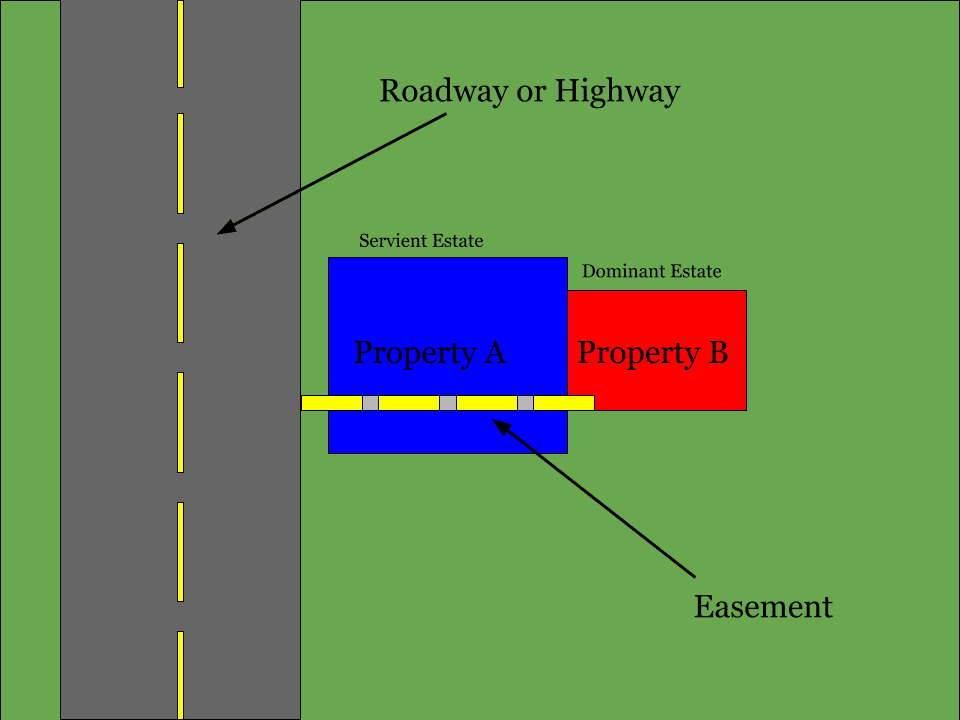
In this example, assume Property B has a valid access easement over Property A to reach the road. Property B is the dominant estate because it benefits from the access. Property A is the servient estate because the access route crosses its land. Being landlocked alone does not establish an easement; its existence depends on the applicable law and facts.
Remember: dominant = benefits; servient = serves. The easement gives a limited right to use the servient land, not ownership of it.
What to Know for the Real Estate Exam
The biggest thing to remember for the real estate exam is which-is-which.
An easement appurtenant benefits land; an easement in gross benefits a person or entity and has no dominant estate. See the California DRE explanation of easements (Chapter 5, pages 71–72).
Want to know more about real estate vocabulary? Check out our free real estate exam flashcards and term list! Test your understanding with our free real estate practice exam.